
|
|

|
|

|
|



5. CGM Metrics Forecast 5-Year Mortality Risk in Diabetes Patients
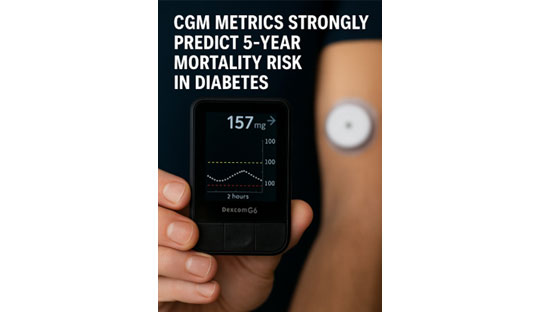
Continuous Glucose Monitoring Unlocks a Deeper Layer of Insight Beyond HbA1c
What the Study Reveals
A recent real-world, longitudinal study involving 2,752 adults with diabetes (65% with type 2) unveiled a powerful link between CGM-derived glucose metrics and 5-year all-cause mortality. Participants used Dexcom CGM for a median of nearly 3 years. Over that time, 407 deaths occurred, allowing for analysis of CGM data against long-term outcomes.
Key Findings & Metrics
-
Higher mortality risk was associated with elevated levels of:
- Mean Glucose (MG) (HR 1.18)
- Time Above Range (TAR) (HR 1.20)
- Glycemic Risk Index (GRI) (HR 1.23)
- Coefficient of Variation (CV), a measure of glucose variability (HR 1.18)
- Lower mortality risk was observed with increased Time in Range (TIR) (HR 0.83)
- These relationships remained significant even after accounting for HbA1c, indicating that CGM metrics capture risk beyond average glucose exposure.
- Notably, CV’s association with mortality was especially strong in patients with lower HbA1c—highlighting the critical role of glucose variability even when average control appears adequate.
Why This Matters
HbA1c provides a long-term average but misses daily glucose swings, hypoglycemia, and hyperglycemia episodes that may drive complications. CGM offers a much richer profile:
- TIR reflects time within safe glucose range.
- TAR, CV, and GRI quantify fluctuations, extremes, and overall glycemic stability.
These metrics reveal hidden risks that HbA1c doesn’t show, allowing earlier action to reduce dangers tied to glucose instability.
GEMS Perspective
This study marks a major shift in diabetes risk assessment:
Think beyond HbA1c. The future of diabetes care may lie in embracing CGM metrics—not just for daily management, but to predict long-term outcomes like mortality.
GEMS Takeaway
CGM doesn’t just help control blood sugar—it could be a life-saving tool. By tracking and targeting glucose variability more aggressively, clinicians can uncover patients at heightened risk and tailor interventions well before complications arise.
We’re witnessing the dawn of an era where precision glycemia—captured by CGM—is central to predicting, preventing, and personalizing diabetes care.
For enquiries info@jothydev.net.
Please visit: jothydev.net | research.jothydev.com | diabscreenkerala.net | jothydev.com/newsletter