
|

|

|
|

|
|



3. A “Cream for Diabetes”? How a New Polymer Could Let Insulin Slip Through Your Skin: No Needles
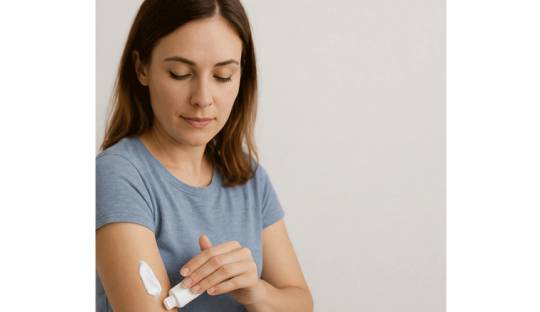
Imagine a world where people with diabetes no longer dread the sting of daily insulin injections. Where instead, they apply a cream and insulin quietly seeps through the skin, enters the bloodstream, and brings blood sugar back to normal. That world may be closer than we think. A breakthrough new study has shown that a specially engineered polymer can carry insulin across intact skin and deliver it safely into circulation in animals.
This discovery could one day transform diabetes care, improving comfort, adherence, and quality of life for millions. But how does it really work and what remains to be done before “insulin cream” becomes a reality?
What Did the Study Do and Why It’s a Big Deal?
For decades, scientists have tried to deliver insulin and other large biomolecules through the skin. The problem: the skin is extremely effective at blocking them. The outermost layer (the stratum corneum) made of dead cells packed in fat layers acts like a fortress against proteins, peptides, and polymers. Traditional transdermal patches work for small molecules, but for large ones like insulin, they nearly always fail.
The research team, led by scientists at Zhejiang University, took a fundamentally different approach. They developed a novel polyzwitterion called poly [2- (N-oxide-N, N dimethylamino) ethyl methacrylate] or OP for short that responds to subtle chemical changes as it passes through the skin.
Here’s the clever mechanism:
- At the acidity of the skin surface (slightly acidic pH), OP becomes positively charged (cationic). This lets it bind to negatively charged fats and lipids in the outer skin layers helping it “stick” to the skin and begin penetration.
- As it moves deeper, into layers where the pH is more neutral, OP transforms into a neutral “zwitterion.” In that form, it can slide more freely through the tightly packed lipid layers and intercellular spaces “hopping” along cell membranes, avoiding being stuck or broken down.
- When OP is conjugated (chemically attached) to insulin (creating “OP-insulin”), this combination can carry insulin across all skin layers from the outermost layer through epidermis and dermis, eventually reaching dermal lymphatic vessels and from there entering systemic circulation (i.e., bloodstream).
In animal experiments both in mice and in miniature pigs (whose skin more closely resembles human skin) this method proved effective: applying OP-insulin topically led to normalization of blood glucose levels within 1–2 hours, comparable to what you’d expect from injected insulin.
Moreover, the effect was sustained in minipigs, the glucose-lowering effect lasted up to 12 hours after a single application.
Importantly, repeated skin application caused no visible skin irritation, inflammation, or structural disruption in the skin layers of test animals.
Key Highlights: Why This Matters for Diabetes and Beyond
- Non-invasive insulin delivery is finally plausible. For the first time, a polymer enables a large therapeutic protein (insulin) to penetrate intact skin and reach the bloodstream, a milestone long thought unachievable.
- Improved comfort and compliance. If adapted for humans, this could spare millions of daily injections, potentially reducing needle-phobia, skin complications, and inconvenience.
- Potentially broader reach beyond insulin. Since OP appears to ferry large biomolecules, the approach might work for other peptide or protein-based therapies, opening the door for non-invasive delivery of many drugs.
- Rapid and sustained glucose control. In animal tests, OP-insulin lowered blood sugar quickly and kept it under control for hours. This suggests potential for real-life use in diabetes management, not just experimental proof of concept.
- Skin-friendly and safe so far. At least in mice and minipigs, repeated application did not damage skin or provoke inflammation, a big plus for safety and usability.
What’s Next Challenges & What Needs to Be Done Before Humans Can Use It
While the discovery is highly promising, several important steps remain before this becomes a safe, effective option for people with diabetes:
- Human trials are needed. So far, results are in animals only. Human skin and immune responses could react differently; long-term safety, absorption rates, dose control, and formulation stability must be evaluated.
- Dose calibration and consistency. Skin permeability varies across individuals (age, ethnicity, skin condition, hydration). Researchers must ensure that insulin delivery is predictable and adjustable delivering just the right dose.
- Long-term safety and immunogenicity. Repeated skin application over years as would happen in diabetic care must be assessed for skin integrity, immune response, possible sensitization or irritation.
- Regulatory and manufacturing hurdles. Scaling up production of OP-insulin (or analogous formulations) under good manufacturing practices, ensuring sterility, stability, and shelf life will be critical.
- Expanding to diverse therapeutics. While insulin has been demonstrated, each new drug will need its own validation for skin permeation, stability, and efficacy when delivered via polymer.
What This Means: A Glimpse into the Future of Diabetes Care
If successfully translated to humans, this polymer-based system could revolutionize how diabetes is managed worldwide. Imagine:
- A daily “insulin patch” or “cream” instead of injections, painless, convenient, and more acceptable, especially for children and needle-phobic patients.
- Better compliance with insulin therapy, potentially leading to better blood sugar control and fewer complications over the long term.
- Easier access to insulin therapy in resource-limited settings, as topical products may be easier to distribute, store, and administer than injectables.
- A platform for delivering other protein- or peptide-based drugs (for hormone replacement, vaccines, biologic therapies) through noninvasive means transforming drug delivery more broadly.
In other words: this finding may not just reshape diabetes treatment, it could reinvent drug delivery as we know it.
For enquiries info@jothydev.net.
Please visit: jothydev.net | research.jothydev.com | diabscreenkerala.net | jothydev.com/newsletter