
|

|

|
|

|
|



5. Blood Pressure Swings & the Eyes: A Hidden Risk for People with Type 2 Diabetes
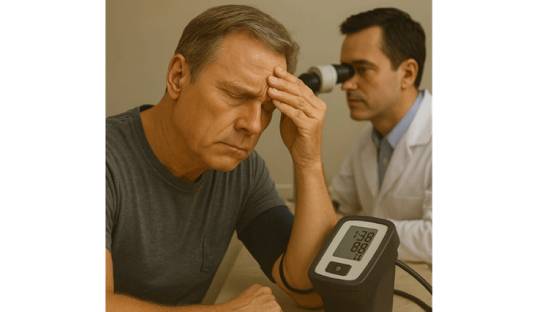
For years, people with diabetes have been advised to monitor blood sugar and many also know that high blood pressure (hypertension) can damage the eyes, kidneys, and heart. But a new study suggests there’s more to the story. It’s not just the average blood pressure that counts the stability of blood pressure over time might play a crucial role in whether someone with diabetes develops eye complications.
This research tracked almost 1,000 people with type 2 diabetes (and no diabetic retinopathy at the start), over several years measuring their blood pressure every 3–6 months, and checking their retinas at least once a year. What emerged was a surprising pattern: large fluctuations in blood pressure even if average blood pressure was “acceptable” were linked to a higher risk of developing diabetic retinopathy (DR).
What Did the Study Show: Key Findings?
- The study examined multiple blood-pressure metrics: not only mean systolic (SBP) and diastolic (DBP) pressure, but also pulse pressure (PP), mean arterial pressure (MAP), and importantly the standard deviation (SD) (i.e., variability) of these measures across repeated visits.
- People whose BP readings fluctuated more, even if their average BP was within relatively safe limits had significantly higher odds of developing retinopathy over the follow-up period.
- This non-linear relationship suggests that steady blood pressure may be just as important (if not more) than achieving a certain “target” BP once. In other words: BP stability, avoiding large ups and downs matters.
Why This Matters, Rethinking Eye Health in Diabetes
Traditionally, diabetes care emphasizes two major themes: controlling blood sugar and controlling blood pressure often targeting fixed “goals” (e.g., keep BP under a threshold). This new evidence suggests that even when you hit those goals, wide swings in blood pressure may still silently damage the retina.
That means:
- A person with “good” average BP might still be at risk if their BP is erratic.
- Eye screening and retinopathy prevention, already critical for people with diabetes may need to pay more attention to BP patterns over time, not just occasional readings.
- For clinicians and patients alike: consistency and stability of BP may deserve as much attention as “good numbers.”
What You (Patient or Caregiver) Can Do
If you have type 2 diabetes (or care for someone who does), it might be wise to:
- Monitor blood pressure regularly (not just one-time checks), ideally with home BP measurements over weeks/months, instead of relying only on occasional clinic visits.
- Share your full BP history (including fluctuations) with your physician, not just your “latest” BP reading.
- Work with your doctor to achieve steady blood pressure, not just average-level control; this may involve lifestyle measures (diet, salt intake, fluid balance), medication timing, stress management, sleep, etc.
- Ensure regular eye examinations (fundus photography or ophthalmoscopy), especially if BP has been unstable. Early detection of retinopathy remains key.
What This Means for Future Diabetes Care
This study opens a new frontier: thinking beyond “targets” toward “trajectories.” For long term complications of diabetes, especially in organs as delicate as the eye, how blood pressure fluctuates may matter as much as what it measures on a single day.
If further research confirms these findings across larger, more diverse groups, we may see:
- New clinical guidelines recommending BP-stability as a standard part of diabetes care.
- Greater use of home BP monitoring or ambulatory BP (24-hour) monitoring among diabetic patients.
- A shift in patient education: from “stay under X mmHg” to “keep BP stable.”
- Enhanced integration of eye-health follow-up with cardiovascular management.
GEMS Insight: A Quiet Risk, Often Overlooked
For people living with type 2 diabetes, this study is a timely reminder: eye health isn’t determined just by sugar control or occasional BP readings, but by the steady rhythm of your cardiovascular health over time.
If you or loved ones have diabetes, consider treating blood pressure not just as a number, but as a continuum and aim for steady, consistent control. That might offer far better protection to your eyes (and vision) than intermittent “good readings.”
For enquiries info@jothydev.net.
Please visit: jothydev.net | research.jothydev.com | diabscreenkerala.net | jothydev.com/newsletter