
|

|

|
|

|
|



3. AI Reads the Pancreas: A New Era in Detecting Type 2 Diabetes at the Tissue Level
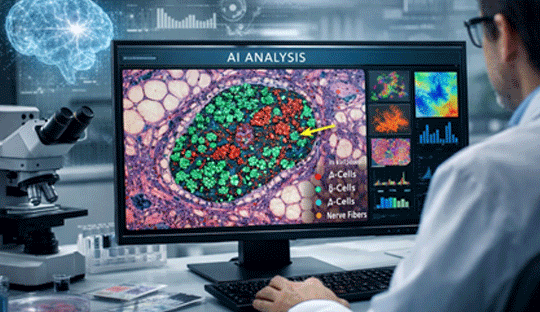
Type 2 diabetes affects nearly 500 million people worldwide, yet much of what we know about it comes from blood sugar measurements rather than direct visualization of the pancreas itself. Traditional histopathology has struggled to detect the subtle structural alterations linked to impaired insulin secretion and β-cell failure. Now, a groundbreaking study combining giga-pixel whole-slide imaging with deep learning and explainable artificial intelligence (AI) has changed that landscape. By analyzing ultra–high-resolution pancreatic tissue images from living donors, researchers trained AI models to predict diabetes status based purely on microscopic morphology. The results were striking: the algorithm not only achieved strong predictive performance but also uncovered patterns invisible to the human eye, transforming complex image data into interpretable biological insights.
Unexpectedly, the strongest predictive signals extended beyond insulin-producing β-cells to include α-cells, δ-cells, and even neuronal axons within the pancreas highlighting the importance of the broader islet microenvironment. The AI system also detected consistent structural differences in individuals with diabetes, including larger adipocyte clusters, altered islet–fat proximity, and smaller islet size. Using explainable AI tools, these features were quantified as measurable tissue biomarkers, moving beyond a “black box” model to one that refines our biological understanding of the disease. While not yet a clinical diagnostic tool, this research signals a transformative shift: digital pathology combined with AI may soon help identify early tissue-level changes, uncover new therapeutic targets, and reshape how we understand and manage diabetes at its most fundamental level.
For enquiries info@jothydev.net.
Please visit: jothydev.net | research.jothydev.com | diabscreenkerala.net | jothydev.com/newsletter