
|

|

|
|

|
|



7. Drug Updates
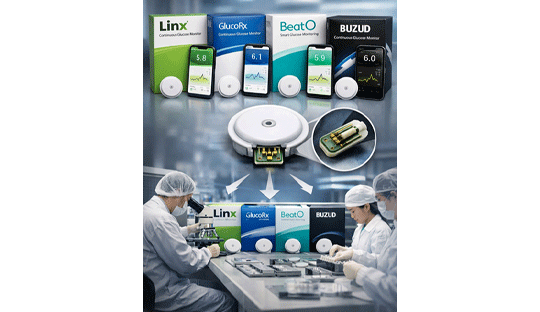
In today’s rapidly expanding continous glucose monitoring device market, brand names like Linx, GlucoRx, Beato and BUZUD appear to offer distinct technologies, unique features, and competitive advantages. Sleek packaging, mobile apps, adhesive designs, and marketing narratives often create the impression of entirely different products. However, behind the scenes, many of these sensors originate from the same microtechnology manufacturer operating under an OEM (Original Equipment Manufacturer) model. This means the core biosensor, the electrochemical component that actually measures glucose is often identical, while branding, software interfaces, and distribution strategies vary. In essence, what seems like competition between different devices may actually be variation in presentation rather than variation in sensing science.
This “one sensor, many labels” approach allows companies to reduce development costs, accelerate regulatory approvals, and enter markets quickly without building sensor technology from scratch. For consumers and clinicians, however, it raises important questions about transparency, value, and true innovation. If the sensing chemistry and microelectrode design are the same, differences in user experience may lie more in packaging and ecosystem integration than in analytical performance. Understanding this layered manufacturing model empowers users to look beyond branding and evaluate what truly matters accuracy, reliability, regulatory compliance, and long-term support rather than assuming that every new name represents a fundamentally new technology.
For enquiries info@jothydev.net.
Please visit: jothydev.net | research.jothydev.com | diabscreenkerala.net | jothydev.com/newsletter