
|

|

|
|

|
|



3. COVID-19 Leaves a Lasting Mark: Higher Risk of Kidney & Blood Pressure Issues in Type 2 Diabetes
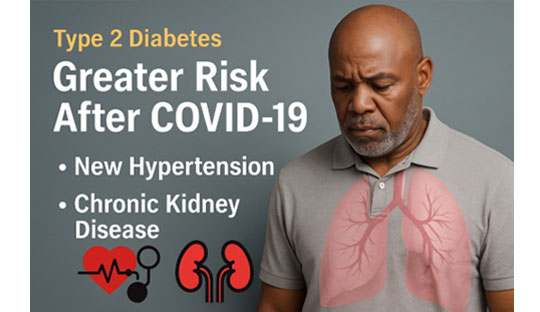
If you have Type 2 diabetes (T2DM) and have recovered from COVID-19, you may carry more than just antibodies-your risk for developing new-onset high blood pressure and chronic kidney disease (CKD) could be significantly higher than before.
A new study reveals something important-people with type 2 diabetes who had COVID-19 are more likely to develop new health problems like:
-
The article outlines:
- High blood pressure (hypertension)
- Chronic kidney disease (CKD)
Even after recovering from the virus, the health risks don't just stop. For people with diabetes, COVID-19 could leave behind a lasting impact on their heart and kidney health.
Why Does This Happen?
COVID-19 is widely recognized as a respiratory illness, but its impact goes far beyond the lungs. The virus triggers a state of widespread, systemic inflammation that can damage blood vessels and vital organs throughout the body. For people living with Type 2 Diabetes (T2DM), who already experience chronic metabolic stress and low-grade inflammation, COVID-19 can act as a major aggravating factor. This combination makes them particularly vulnerable to developing complications such as high blood pressure and chronic kidney disease—even after recovering from the initial infection.
One of the key complications seen post-COVID in diabetic individuals is hypertension. The virus can injure the endothelium, the inner lining of blood vessels, leading to stiffening and reduced flexibility of the arteries. This vascular damage increases resistance to blood flow, putting extra strain on the heart and ultimately raising blood pressure. Since many people with T2DM already have underlying cardiovascular risks, this inflammatory response can accelerate the onset or worsening of hypertension, even in those who previously had normal readings.
The kidneys, which are highly sensitive to changes in blood flow and pressure, are another target. COVID-19–induced inflammation can impair kidney function by reducing perfusion and damaging the glomeruli, the key filtering structures. In people with diabetes—especially those with early or undiagnosed diabetic nephropathy—this can speed up progression to chronic kidney disease (CKD). This “double burden” of diabetes and COVID-19 highlights the importance of regular monitoring and early intervention to manage blood pressure and kidney health in the months following recovery from the virus.
What Should Patients and Caregivers Know?
If you or a loved one has type 2 diabetes and has recovered from COVID-19:
- Don’t ignore follow-ups—silent damage may already be underway
- Check your blood pressure regularly, even if it was normal before
- Test kidney function through routine urine and blood tests
- Watch for symptoms like swelling in the legs, fatigue, or frequent urination—these may signal early kidney trouble.
- Follow a kidney- and heart-friendly diet: low sodium, moderate protein, and controlled carbs.
- Stay active and maintain weight.
- Discuss long-COVID risks with your doctor—early intervention can slow disease progression.
What Can Be Done?
Prevention and early detection are key.
- Doctors may recommend closer monitoring of blood pressure and kidney health after a COVID-19 infection
- Patients should maintain good sugar control, adopt a kidney-friendly diet, and stay hydrated
- Medications may be adjusted based on changes in blood pressure or kidney function
GEMS Takeaway
COVID-19 may be in the past—but for people with diabetes, its impact could be long-term. By staying informed and proactive, we can catch these new risks early and manage them better.
Your recovery doesn’t end with a negative test. Let’s keep an eye on what comes next.
For enquiries info@jothydev.net.
Please visit: jothydev.net | research.jothydev.com | diabscreenkerala.net | jothydev.com/newsletter