
|

|

|
|

|
|



5. Uncovering India's Liver Health: Regional Trends in MASLD
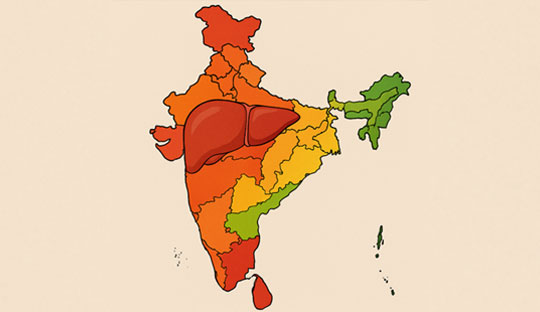
Metabolic dysfunction-associated steatotic liver disease (MASLD), formerly known as NAFLD, is now recognized as a critical health challenge across India. Strongly linked to obesity, sedentary lifestyles, and metabolic syndrome, MASLD has seen a dramatic rise in prevalence. A recent large-scale, multicenter study-the MAP Study-assessed 13,750 adults across 105 diabetes and endocrine clinics in six Indian regions using non-invasive diagnostic tools like FibroScan™ (LSM and CAP values).
Obesity Begins Before Birth
The national MASLD prevalence stood at 68.2%, with liver fibrosis detected in 33.7% of participants. The north zone topped the charts
with the highest MASLD burden (73.3%) and alarming figures from states like Uttarakhand (80%) and Punjab (with nearly half showing
signs of severe fibrosis). Meanwhile, Kerala reported the highest rate of cirrhosis (F4 stage fibrosis), and Jammu & Kashmir recorded
the greatest proportion of severe liver fat accumulation (S3 steatosis at 50.3%).
A national snapshot that isn’t uniform
- Nearly seven in ten adults (68.2 %) screened with FibroScan™ already meet MASLD criteria (CAP ≥ 238 dB/m).
- One in three (33.7 %) have progressed far enough to show liver stiffness in the fibrotic range (LSM ≥ 7 kPa).
- Yet the burden isn’t evenly spread—the farther north you travel, the hotter the map glows.
Why the stark gradients?
- Dietary signatures: ghee rich breads and sweets of the North vs. rice coconut patterns in the South vs. fish based, lower calorie plates in the Northeast.
- Urbanisation & adiposity: the Delhi–Mumbai growth corridor shows MASLD tracking tightly with visceral obesity and type 2 diabetes.
- Screening access: higher figures in wealthier states may paradoxically reflect better detection rather than worse health alone.
Regional disparities reflect complex interactions between genetics, dietary patterns, urbanization, and access to healthcare. For example, northern regions—characterized by calorie-dense diets and high metabolic risk—showed elevated rates of advanced MASLD. In contrast, the east and northeast zones reported relatively lower prevalence, possibly due to underdiagnosis or differing lifestyle habits.
This study underscores the urgent need for region-specific screening and public health strategies. Using reliable tools like LSM and CAP allows for better tracking and early intervention. As MASLD can silently progress to cirrhosis or liver cancer, proactive screening, especially among individuals with type 2 diabetes, is essential.
MASLD is no longer a niche hepatology concern—it is entangled with India’s metabolic story. A red to green map reminds us that where we live, how we eat and how we screen radically alter our liver’s future. Region tailored prevention and early detection are India’s most potent tools to keep today’s steatosis from becoming tomorrow’s cirrhosis.
For enquiries info@jothydev.net.
Please visit: jothydev.net | research.jothydev.com | diabscreenkerala.net | jothydev.com/newsletter