
|

|

|
|

|
|



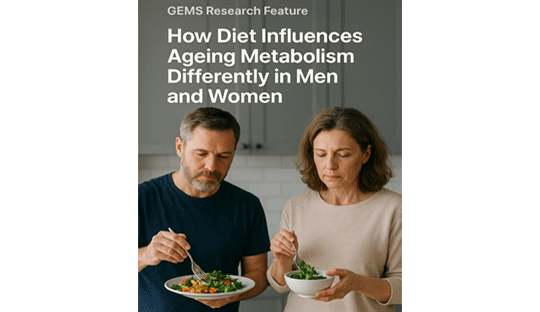
3. How Diet Influences Ageing Metabolism Differently in Men and Women
Background
Ageing is accompanied by progressive metabolic decline, reduced insulin sensitivity, altered lipid oxidation, increased visceral adiposity, and chronic low-grade inflammation. Diet is one of the most powerful modifiers of these processes, yet sex differences in nutritional metabolism remain under-explored.
Men and women differ in hormone profiles, body composition, and substrate utilization; these biological differences likely shape how dietary patterns affect insulin sensitivity and metabolic ageing.
To explore these nuances, researchers from the University of Illinois Urbana-Champaign conducted a detailed analysis examining how habitual diet relates to insulin sensitivity and metabolic health in older adults, focusing on sex-specific differences.
Study Design
- Cohort: Healthy older adults (mean age ≈ 69 years; both men and post-menopausal women) enrolled in the MASTERS study.
-
Assessments:
- 4-day food diaries to capture detailed macronutrient and micronutrient intake.
- Measures of insulin sensitivity (via oral glucose tolerance testing).
- Body composition assessed by DXA and CT, quantifying visceral and subcutaneous fat distribution.
- Physical activity levels and body mass index (BMI) were accounted for in the analyses.
- Objective: To identify dietary components that correlate with better insulin sensitivity in ageing men and women.
Key Findings
-
Sex-Specific Dietary Correlations with Insulin Sensitivity
-
In Men:
- Higher intake of plant-based proteins and whole grains was strongly associated with improved insulin sensitivity.
- Beneficial nutrients included inositol, phytic acid, oxalic acid, and vitamin E, commonly found in legumes, nuts, seeds, and whole grains.
- In contrast, higher consumption of refined grains and conjugated linoleic acid (CLA), typically from processed meats and dairy, was associated with reduced insulin sensitivity.
- These associations remained significant even after adjusting for BMI and physical activity, indicating independent metabolic benefits of plant-forward diets in older men.
-
In Women:
- The relationship between diet and insulin sensitivity was weaker and less consistent.
- Initial analyses suggested possible benefits from moderate alcohol intake (particularly wine) and xylitol; however, these associations became non-significant after multivariate adjustment.
- Overall, body composition—especially BMI and adiposity—had a stronger influence on insulin resistance than specific nutrient intake.
-
In Men:
-
Body Composition and Fat Distribution
- Men with higher intake of plant-derived nutrients exhibited lower android (abdominal) fat mass, supporting their improved insulin sensitivity.
- In women, total body fat percentage and elevated BMI were the dominant predictors of insulin resistance, independent of dietary pattern.
Interpretation & Scientific Context
These findings highlight a fundamental concept: metabolic ageing is sex-dimorphic.
- Men may derive greater metabolic benefit from diets rich in plant proteins, polyphenols, and fibre-dense whole grains, potentially due to enhanced mitochondrial efficiency and reduced inflammatory signalling.
- Women, particularly post-menopausal, appear to experience metabolic changes driven more by hormonal shifts and adiposity distribution than by individual nutrient intake.
- The attenuation of dietary effects in women may reflect the loss of estrogen’s insulin-sensitizing action and age-related alterations in fat partitioning.
This sex-specific metabolic response underscores the need for individualized dietary strategies in older adults, integrating biological sex as a key variable—supporting the evolution toward “precision nutrition” for healthy ageing.
Clinical and Public Health Implications
-
For Clinicians:
- Encourage older men to increase intake of plant-derived proteins and whole grains to improve insulin sensitivity and reduce central adiposity.
- In older women, prioritize weight management and body composition optimization while maintaining balanced macronutrient intake.
-
For Researchers:
- Future intervention studies should be sex-stratified and account for hormonal status, gut microbiota composition, and genetic determinants of nutrient metabolism.
-
For Public Health:
- “One-size-fits-all” dietary guidelines may overlook critical sex-specific responses; tailored nutritional strategies could enhance prevention of type 2 diabetes and age-related metabolic disorders.
GEMS Perspective
This study underscores a vital evolution in our understanding of ageing metabolism: sex differences extend beyond hormones into diet–metabolism interactions.
For diabetes prevention and metabolic health in ageing populations, precision nutrition, accounting for sex, age, and body composition ; may soon replace traditional blanket recommendations.
As clinicians and researchers, we stand at the threshold of a new paradigm where the question shifts from “What is a healthy diet?” to “What is a healthy diet for whom?”
For enquiries info@jothydev.net.
Please visit: jothydev.net | research.jothydev.com | diabscreenkerala.net | jothydev.com/newsletter