
|

|

|
|

|
|



5. Relative Fat Mass (RFM): A Better Predictor of Diabetes Than BMI?
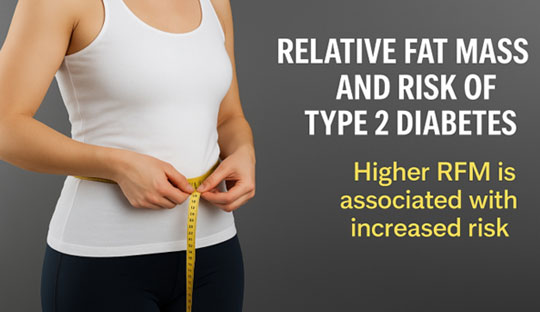
A 14-year prospective study links RFM with future diabetes risk — especially in women and younger adults.
Introduction: Rethinking How We Predict Diabetes Risk
Traditional tools like Body Mass Index (BMI) have long been used to assess obesity-related health risks, including type 2 diabetes. However, BMI has limitations, it doesn’t distinguish fat from muscle, nor does it account for fat distribution. A new long-term study from the Tehran Lipid and Glucose Study (TLGS) brings fresh attention to Relative Fat Mass (RFM) as a potentially superior alternative. This simple, waist-based measure could be a more accurate and practical way to flag early risk of diabetes, even before abnormal glucose levels appear.
The Study: Following Over 8,000 Adults for 14 Years
Researchers followed 8,419 adults (56% women; mean age ~40 years) who were free of diabetes at baseline. Over a median 14-year follow-up, 1,382 participants (16.4%) developed type 2 diabetes. The researchers assessed the association between RFM and incident diabetes, comparing its predictive value against BMI and waist circumference (WC) and waist-to-hip ratio (WHR). The findings were striking: a one standard deviation increase in RFM was associated with a 1.26-fold higher diabetes risk in men and a 1.52-fold higher risk in women. In younger individuals especially women, the association was even more pronounced. Importantly, the predictive power of RFM was comparable to waist circumference and superior to BMI, reinforcing its clinical relevance.
What Is RFM and How Is It Calculated?
Relative Fat Mass (RFM) is a simple anthropometric index that estimates body fat percentage using height and waist circumference, a better reflection of metabolic risk than total weight alone. Unlike BMI, which cannot differentiate between fat and muscle or capture central adiposity, RFM directly targets visceral fat, a key driver of insulin resistance and type 2 diabetes.
The RFM formula is:
- For men: RFM = 64 – (20 × height / waist circumference)
- For women: RFM = 76 – (20 × height / waist circumference)
All measurements are in centimeters. This makes RFM easy to calculate at home or in primary care settings using only a measuring tape — no scales or laboratory tests required.
Why It Matters: A Tool for Early Detection and Prevention
This study underscores RFM’s potential as a low-cost, practical, and effective screening tool for diabetes risk. Particularly in women and younger adults, RFM may identify those at risk even when traditional markers like BMI appear “normal.” For clinicians, RFM can be integrated into routine assessments to improve early detection of metabolic risk. For individuals, especially in resource-limited settings, it offers a self-monitoring tool that empowers lifestyle change before diabetes develops.
GEMS Perspective: Shifting Toward Smarter Screening
As the global burden of type 2 diabetes continues to rise, there is growing need for simple, scalable, and more precise predictors of risk. This study positions RFM as a strong candidate to supplement or even replace BMI in certain contexts. By emphasizing fat distribution over body weight alone, RFM aligns better with the pathophysiology of diabetes and may help refine screening and prevention efforts.
GEMS Takeaway
Relative Fat Mass is not just another number, it’s a better mirror of metabolic health. With its ease of use, affordability, and scientific backing, RFM could help clinicians and individuals alike take smarter, earlier action in the fight against diabetes. As we move toward personalized and preventive care, tools like RFM may play a key role in reshaping how we understand and address cardiometabolic risk.
For enquiries info@jothydev.net.
Please visit: jothydev.net | research.jothydev.com | diabscreenkerala.net | jothydev.com/newsletter