
|

|

|
|

|
|



5. Why Chronic Wounds Refuse to Heal: How Staphylococcus aureus Exploits the Wound Edge
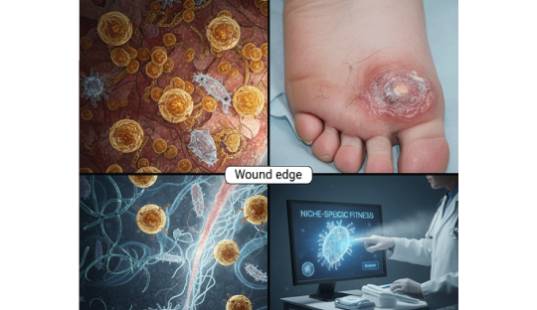
Chronic wounds remain one of the most debilitating and costly complications of diabetes, often progressing silently from delayed healing to infection, hospitalisation, and even amputation. While poor perfusion, neuropathy, and immune dysfunction are well-recognised contributors, growing evidence suggests that microbial adaptation within the wound environment itself plays a decisive role. A new study published in Nature Communications provides critical insight into this process, revealing how Staphylococcus aureus, one of the most common pathogens in diabetic wounds is uniquely equipped to thrive at the wound edge, where healing is most vulnerable.
Understanding the Wound Edge: A Unique Biological Niche
The wound edge is not merely a transition zone between damaged and healthy tissue. It is a highly dynamic microenvironment characterised by:
- Fluctuating oxygen levels
- Altered nutrient availability
- Persistent inflammation
- Immune cell infiltration
- Metabolic stress
In people with diabetes, these disturbances are amplified, creating conditions that are hostile to tissue regeneration, yet paradoxically favourable to certain pathogens.
The researchers approached wound infection not simply as bacterial invasion, but as an ecological problem, asking how bacteria adapt to survive and compete in this complex, stressed environment.
Study Focus and Approach
Using advanced microbiological, genetic, and ecological analyses, the investigators examined how Staphylococcus aureus behaves specifically at the wound edge. Rather than studying the bacterium in isolation or uniform culture conditions, they focused on niche-specific fitness, the traits that allow S. aureus to persist precisely where host defences and therapeutic interventions are most active.
This approach revealed that S. aureus is not passively surviving, but actively adapting its metabolism, stress responses, and virulence mechanisms to exploit wound-specific conditions.
Key Findings: How S. aureus Gains the Upper Hand
The study uncovered several adaptive strategies that help S. aureus dominate the wound edge:
- Metabolic Flexibility: The bacterium shifts energy production pathways to cope with low oxygen and altered nutrient supply, allowing continued growth where other microbes fail.
- Stress Resistance: Enhanced stress-response mechanisms enable survival despite oxidative stress and immune attack.
- Virulence Modulation: Rather than maximal aggression, S. aureus fine-tunes virulence factor expression to balance persistence with host tolerance.
- Competitive Fitness: These adaptations give S. aureus a survival advantage over competing microbes, promoting long-term colonisation and biofilm formation.
Together, these traits explain why S. aureus infections are remarkably persistent and difficult to eradicate in chronic wounds.
Why This Matters in Diabetes?
In diabetes, chronic hyperglycaemia, impaired immunity, and microvascular dysfunction already delay wound healing. The findings from this study suggest that these host factors inadvertently shape a wound environment that favours bacterial adaptation, turning the wound edge into a sanctuary for infection.
This helps explain why:
- Antibiotics alone often fail
- Wounds recur despite apparent clearance
- Biofilms form and resist treatment
- Healing stalls even with good glycaemic control
In short, the wound itself becomes biologically optimised for infection.
Rethinking Treatment: Beyond Antibiotics
By framing chronic wound infection as an ecological adaptation problem, this research opens new therapeutic possibilities:
- Microenvironment-targeted therapies to modify oxygenation, inflammation, or nutrient availability
- Anti-biofilm strategies that disrupt bacterial persistence rather than bacterial survival alone
- Adjunctive metabolic interventions to improve local tissue resilience
- Precision wound care tailored to the biological state of the wound edge, not just microbial culture results
This approach aligns with modern precision medicine principles, where treating the environment is as important as treating the pathogen.
Broader Implications
Although this study focuses on S. aureus, the concept of niche-specific fitness may apply to other pathogens commonly found in diabetic wounds. It also reinforces the importance of early wound intervention, before microbial adaptation becomes entrenched and difficult to reverse.
GEMS Takeaway
Chronic diabetic wounds do not fail to heal by chance. This study shows that Staphylococcus aureus actively adapts to the wound edge, exploiting its unique metabolic and inflammatory environment to persist and resist treatment. Effective wound management in diabetes must therefore go beyond antibiotics, targeting the local wound ecosystem to restore conditions that favour healing over infection.
For enquiries info@jothydev.net.
Please visit: jothydev.net | research.jothydev.com | diabscreenkerala.net | jothydev.com/newsletter