
|

|

|
|

|
|



3. Liver Transplantation in Diabetes: A Turning Point for Medication Needs?
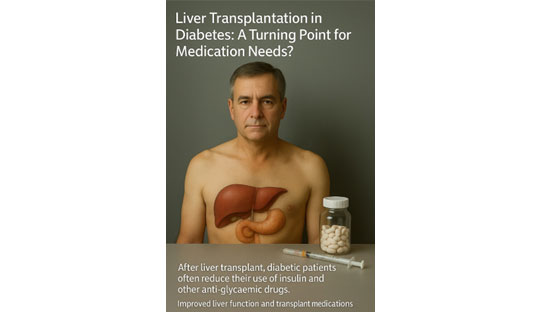
Liver Transplantation in Diabetes: A Metabolic Reset or a Therapeutic Challenge?
Insights from a Population-Based Study on Post-Transplant Anti-Glycaemic Medication Use
Background: The Liver–Glucose Axis
The liver plays a central role in glucose homeostasis through glycogen storage, gluconeogenesis, insulin degradation, and lipid metabolism. In advanced liver disease, these regulatory pathways become dysregulated, often leading to secondary insulin resistance, altered glucose clearance, and the development of hepatogenous diabetes.
Post liver transplantation, hepatic metabolic function is often restored, offering an opportunity to recalibrate glucose regulation. However, this recovery occurs within a complex post-surgical environment that includes immunosuppressive therapy, systemic inflammation, and metabolic stress, all of which influence glycaemic control.
Study Overview
A recent population-based cohort study published in the Journal of Diabetes investigated how the use of anti-glycaemic medications changes before and after liver transplantation in individuals with pre-existing diabetes mellitus. The study also explored how these changes relate to the type of immunosuppressive therapy administered and the underlying indication for the transplant.
Key Findings
-
A substantial proportion of patients (38.8% out of 100 patients) were able to reduce or discontinue anti-diabetic therapies, including insulin, after transplantation.
Changes in insulin requirements post-liver transplantation:
- Before transplant: 60.5 ± 44.6 units/day
- 1 month after transplant: 51.1 ± 31.2 units/day
- 15.5% reduction (p = 0.02)
- 3 months after transplant: 43.4 ± 29.5 units/day
- 28.2% reduction (p < 0.0001)
- 6 months after transplant: 33.6 ± 29.7 units/day
- 44.4% reduction (p < 0.0001)
These findings show a progressive and significant decline in insulin requirements following liver transplantation
Improved hepatic function post-transplant contributed to better glucose metabolism and insulin clearance, accounting for the observed reduction in pharmacologic need.
- Conversely, a subset of patients experienced worsening glycaemic control due to:
- Corticosteroid-based immunosuppression, known to induce insulin resistance and promote hepatic gluconeogenesis.
- Post-operative weight gain, which exacerbates peripheral insulin resistance.
- Renal dysfunction, influencing insulin clearance and glucose metabolism.
How Immunosuppressants Affected Insulin Needs?
- Only tacrolimus showed a clear effect on insulin reduction after transplant.
- The higher the dose of tacrolimus, the less the insulin dropped.
- This link was statistically significant (p = 0.03).
- Other drugs like mycophenolate mofetil (MMF), prednisone, and azathioprine did not show any clear link to insulin changes.
- Many patients were on multiple immunosuppressants, so the effects may have overlapped.
- A test showed no difference in insulin reduction between those on or off MMF or azathioprine.
Pathophysiological Insights
Post-transplant glycaemic trajectories are influenced by competing physiological processes:
- Improved hepatic function restores normal insulin clearance and glucose buffering capacity.
- Exogenous factors, particularly calcineurin inhibitors and glucocorticoids, impair insulin sensitivity and β-cell function.
- Nephrotoxicity from immunosuppressants further complicates glucose metabolism.
This dynamic interplay results in heterogeneous glycaemic outcomes, requiring individualized care pathways.
Clinical Implications
- Tailored Glycaemic Monitoring
- Personalized Pharmacotherapy
- Hepatic and renal function
- Immunosuppressive regimen
- Body weight and muscle mass
- Inflammatory status
- Opportunity for Deprescribing
Therapeutic regimens should be reassessed frequently, accounting for changes in:
In selected patients, reduced medication dependency may be achieved, particularly for those previously reliant on insulin. This represents a potential quality-of-life enhancement and reduced risk of hypoglycemia.
GEMS Insight
This study offers valuable insights into an underappreciated domain of diabetes care: the metabolic ripple effects of solid organ transplantation. Liver transplantation may represent a metabolic reset for some individuals, reducing pharmacologic burden, while simultaneously introducing new risks for dysglycaemia in others.
Endocrinologists and transplant teams must adopt a collaborative, dynamic approach to managing diabetes in this population—balancing the potential for therapeutic simplification with the risks of immunosuppression-induced hyperglycemia or NODAT (new-onset diabetes after transplant).
Full Study Access:
For enquiries info@jothydev.net.
Please visit: jothydev.net | research.jothydev.com | diabscreenkerala.net | jothydev.com/newsletter