Read in Malayalam:

|

|

|
|

|
|



5. Food Choices and Metabolic Risk in India: Lessons from ICMR–INDIAB Survey-21
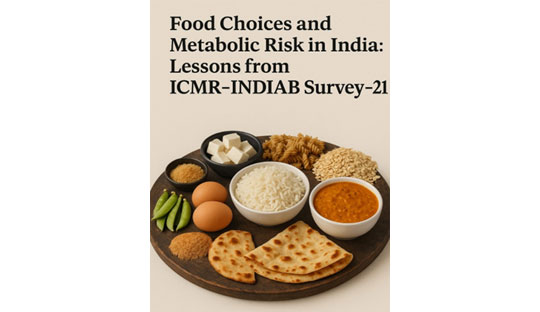
Rapid dietary changes in India are contributing to a surge in type 2 diabetes (T2D), obesity, and other metabolic diseases. The ICMR–INDIAB Survey-21, analyzing 18,090 adults nationwide, provides the most comprehensive picture yet of India’s diet and its health implications.
Study Snapshot
Researchers examined dietary intake and macronutrient patterns and evaluated their relationship with metabolic risk factors such as T2D, prediabetes, general obesity, and abdominal obesity.
Key Findings:
- High carbohydrate intake: Indian diets are heavily based on refined grains, white rice, milled cereals, and added sugar, providing ~62% of total energy.
- High saturated fat and low protein: Fat contributes ~25% and protein only ~12% of daily energy below the recommended 15%.
-
Carbohydrate driven risks: Individuals with the highest carbohydrate intake had higher odd ratio (OR) of:
- Newly diagnosed T2D: OR = 1.30
- Prediabetes: OR = 1.20
- Generalized obesity: OR = 1.22
- Abdominal obesity: OR = 1.15
- Whole grain substitution alone isn’t enough: Replacing refined grains with whole wheat or millet without reducing total carbs did not significantly lower T2D or abdominal obesity risk.
Isocaloric Substitution Insights:
-
Replacing 5% of energy from carbohydrates with plant, dairy, egg, or fish protein lowered the risk of T2D and prediabetes.
- Example: Dairy protein reduced T2D risk (OR = 0.89) and prediabetes risk (OR = 0.82).
- Egg and fish protein also showed protective associations.
Why This Matters
- High-carb, low-protein diets are a key driver of India’s growing metabolic disease burden
- Simply switching to whole grains without reducing total carbs may not be enough to prevent T2D
- Increasing plant and dairy protein intake while reducing refined carbs and saturated fats can significantly improve metabolic health.
Public Health Implications
- Dietary interventions should focus on balanced macronutrient distribution, not just promoting whole grains.
- Policies encouraging protein-rich foods alongside reduced refined carbohydrate intake could help curb T2D, prediabetes, and obesity.
- With projected economic costs of overweight and obesity in India reaching $839 billion by 2060, practical dietary strategies are urgent.
GEMS Takeaway
- Not all calories are equal. In India, high-carb, low-protein diets are strongly linked to T2D and obesity.
- Simple shifts, adding plant or dairy protein while cutting refined carbs,can make a measurable difference in population health.
- This study provides evidence-based guidance for nutrition policies, public health campaigns, and individual dietary choices.
This newsletter is published for free distribution through the Internet for doctors, patients and public for promoting healthy lifestyles.
For enquiries info@jothydev.net.
Please visit: jothydev.net | research.jothydev.com | diabscreenkerala.net | jothydev.com/newsletter
For enquiries info@jothydev.net.
Please visit: jothydev.net | research.jothydev.com | diabscreenkerala.net | jothydev.com/newsletter