
|

|

|
|

|
|



3. Can a Common Virus Protect Against Type 1 Diabetes? Emerging Evidence Suggests a Surprising Role for Epstein–Barr Virus
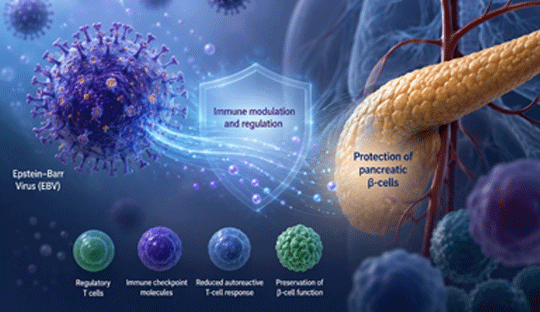
For decades, viral infections have been considered potential triggers of type 1 diabetes (T1D). However, a recent commentary published in Nature Reviews Endocrinology challenges this long-held belief by proposing that Epstein–Barr virus (EBV), the virus responsible for infectious mononucleosis may actually protect against the development and progression of T1D. While EBV has been implicated in autoimmune disorders such as multiple sclerosis and systemic lupus erythematosus, accumulating clinical and experimental evidence suggests it may have the opposite effect in T1D by modulating the immune system. Studies have shown that patients with latent EBV infection who receive anti-CD3 immunotherapy demonstrate higher C-peptide levels, improved preservation of pancreatic β-cell function, and a significantly longer delay in progression from stage 2 (islet autoimmunity) to stage 3 (clinical diabetes) compared with patients without EBV infection.
Researchers believe EBV may exert this protective effect by reshaping immune responses that drive β-cell destruction. Latent EBV infection has been associated with increased expression of immune checkpoint molecules such as CTLA-4, TIGIT, and LAG3, enhanced regulatory T-cell activity, reduced antigen receptor signaling, and diminished autoreactive CD8⁺ T-cell responses, all of which may help suppress autoimmune attack on pancreatic β-cells. Supporting evidence also comes from animal studies, where infection with murine gammaherpesvirus-68, a close relative of EBV, delayed or even prevented the onset of T1D by reducing autoreactive T-cell recruitment and impairing antigen presentation. Although these findings do not establish EBV as a therapeutic strategy, they offer intriguing insights into how certain viral infections may beneficially reprogram immune responses. The authors conclude that understanding the complex interaction between EBV and the immune system could pave the way for novel diagnostic biomarkers, preventive strategies, and immunomodulatory therapies for type 1 diabetes.
For enquiries info@jothydev.net.
Please visit: jothydev.net | research.jothydev.com | diabscreenkerala.net | jothydev.com/newsletter