
|

|

|
|

|
|



5. Scientists Uncover a Novel Immune Target to Preserve Muscle in Obesity
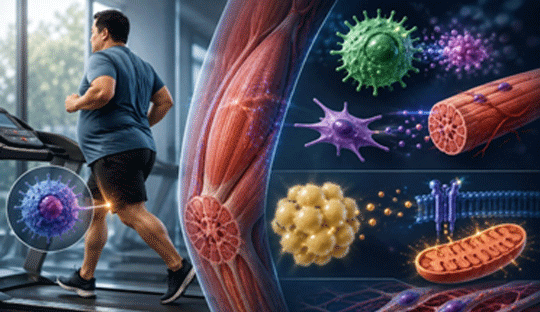
Obesity not only increases body weight but also accelerates the loss of skeletal muscle mass and strength, leading to reduced mobility, frailty, and worsening metabolic health. In a breakthrough preclinical study, researchers from the University of Toyama, Japan, identified a promising immune-based strategy to combat this overlooked complication. The team selectively deleted transforming growth factor-beta 1 (TGF-β1) from a specialized population of CD206⁺ M2 macrophages, immune cells involved in tissue repair and regeneration. When exposed to a high-fat diet, these genetically engineered mice gained similar body weight as control animals but exhibited nearly double the running endurance, stronger grip strength, improved insulin sensitivity, larger muscle fibers, and significantly greater lean muscle mass. These findings suggest that targeting inflammatory signaling pathways, rather than body weight alone, may help preserve muscle health in individuals with obesity.
At the molecular level, the researchers identified two complementary mechanisms underlying these benefits. First, deletion of TGF-β1 activated fibro-adipogenic progenitors (FAPs); muscle-resident support cells, which increased the production of follistatin and follistatin-like protein-1, both powerful stimulators of new muscle fiber formation (myogenesis). Second, fat tissue secreted higher levels of adiponectin, which activated the AdipoR1 receptor in skeletal muscle and triggered the AMPK/SIRT1/PGC-1α pathway, a master regulator of mitochondrial function, cellular energy production, and fatty acid oxidation. This resulted in healthier mitochondria, improved exercise capacity, and enhanced metabolic efficiency. The researchers also observed reduced expression of fibrosis-related genes, indicating better preservation of muscle structure in addition to improved regeneration. Although these findings are currently limited to animal models, they identify M2 macrophage-derived TGF-β1 as an exciting therapeutic target for obesity-associated sarcopenia, opening the door to future treatments aimed at preserving muscle function, mobility, and independence alongside metabolic health.
For enquiries info@jothydev.net.
Please visit: jothydev.net | research.jothydev.com | diabscreenkerala.net | jothydev.com/newsletter