
|

|

|
|

|
|



6. Higher Protein Intake May Not Accelerate Kidney Function Decline in Older Adults
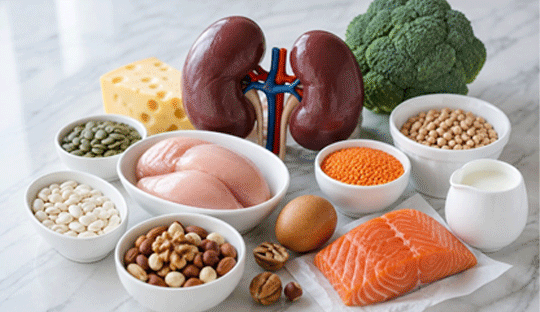
For years, higher dietary protein intake has been viewed with caution because of concerns that it may place additional stress on the kidneys. However, new findings from a 10-year prospective cohort study in Norway suggest that higher habitual protein intake may not necessarily accelerate kidney function decline in middle-aged and older adults. The study included 1,324 participants with a mean age of 63.6 years and used iohexol-measured glomerular filtration rate (mGFR), a more direct assessment of kidney function to track changes over time. Participants consumed an average of approximately 1.2 g of protein/kg/day. After adjustment for multiple potential confounders, researchers found no significant association between higher protein intake and faster annual decline in mGFR.
Importantly, higher protein intake was also not associated with an increased risk of accelerated GFR decline or development of mGFR below 60 mL/min/1.73 m² among participants who initially had preserved kidney function. The findings challenge the idea that protein restriction should routinely be used as a lifestyle strategy to prevent CKD in otherwise healthy adults. However, the study has important limitations: protein intake was self-reported, specific protein sources were not assessed, and the predominantly healthy Norwegian population may not represent people with established CKD or different dietary patterns. The findings therefore should not be interpreted as evidence that high protein intake is safe for everyone with kidney disease. Rather, they suggest that in generally healthy middle-aged and older adults, moderate-to-higher habitual protein intake was not associated with measurable kidney function decline over 10 years.
For enquiries info@jothydev.net.
Please visit: jothydev.net | research.jothydev.com | diabscreenkerala.net | jothydev.com/newsletter