
|

|

|
|

|
|



6. It’s Not Just How Many Steps You Take, How Fast You Walk Matters Too
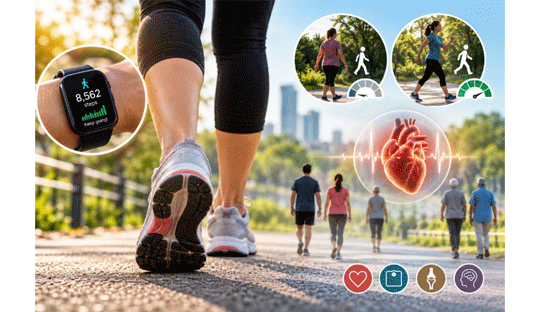
A large prospective UK Biobank study using device-measured physical activity highlights an important practical message: step count and walking intensity may complement each other in their association with mortality risk. The analysis included 64,743 adults with a mean age of 61.5 years and assessed walking intensity using peak 30-minute cadence—the average number of steps per minute during the 30 highest-cadence minutes of the day, which did not need to be consecutive. The lowest overall all-cause mortality risk was observed among those accumulating 7,500–10,000 steps/day, while faster walking was particularly associated with lower mortality risk among people taking fewer than 5,000 steps/day.
The findings suggest that people who cannot achieve high step counts may still benefit from incorporating brisker walking, while those unable to walk at a faster pace may benefit from gradually increasing their daily step volume. Among participants taking 7,500–10,000 steps/day, approximately 90–100 steps/min for 30 minutes was associated with particularly low all-cause and cardiovascular mortality risk. However, these findings come from an observational study and do not establish that a specific step count or cadence directly prevents mortality. Individual walking goals should therefore consider age, mobility, fitness, health conditions, and safety.
For enquiries info@jothydev.net.
Please visit: jothydev.net | research.jothydev.com | diabscreenkerala.net | jothydev.com/newsletter